

What Are The Instructions For A So Clean Automated Sanitizer
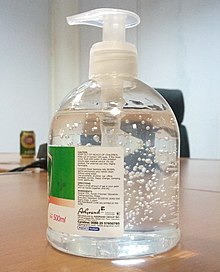 A typical pump bottle dispenser of hand sanitizer gel | |
| Clinical data | |
|---|---|
| Other names | Paw sanitizer, paw antiseptic,[1] hand disinfectant, mitt rub, handrub[ii] |
Manus sanitizer (also known as mitt antiseptic, paw disinfectant, hand rub, or handrub) is a liquid, gel or foam mostly used to kill many viruses/bacteria/microorganisms on the hands.[3] [iv] In almost settings, hand washing with soap and water is generally preferred.[5] [half dozen] [seven] Manus sanitizer is less effective at killing certain kinds of germs, such as norovirus and Clostridium difficile, and different hand washing, it cannot physically remove harmful chemicals.[5] People may incorrectly wipe off hand sanitizer before it has dried,[5] and some are less constructive because their booze concentrations are too low.[v]
Alcohol-based hand sanitizer that is at to the lowest degree 60% (5/v) booze in h2o (specifically, ethanol or isopropyl booze/isopropanol (rubbing alcohol)) is recommended past the United States Centers for Affliction Command and Prevention (CDC), but only if soap and h2o are not bachelor.[8] The CDC recommends the following steps when using an booze-based manus sanitizer:
- Apply production to the palm of 1 hand.
- Rub easily together.
- Rub the product over all surfaces of easily and fingers until easily are dry out.[8]
- Practise not go near flame or gas burner or whatsoever burning object during application of hand sanitizer.
In near healthcare settings, alcohol-based hand sanitizers are preferable to hand washing with soap and h2o,[9] [ten] because information technology may exist better tolerated and is more than effective at reducing bacteria.[4] Hand washing with soap and water, notwithstanding, should be carried out if contagion can be seen, or post-obit the utilize of the toilet.[11] The general use of non-booze-based mitt sanitizers is not recommended.[9]
Booze-based versions typically contain some combination of isopropyl alcohol, ethanol (ethyl booze), or due north-propanol, with versions containing sixty% to 95% booze the most effective.[four] Intendance should be taken as they are flammable.[9] Alcohol-based paw sanitizer works against a broad variety of microorganisms but non spores.[4] Compounds such as glycerol may be added to prevent drying of the peel.[4] Some versions comprise fragrances; however, these are discouraged due to the risk of allergic reactions.[12] Non-alcohol based versions typically comprise benzalkonium chloride or triclosan; but are less effective than alcohol-based ones.[13] [14] [15]
Alcohol has been used as an antiseptic at least as early as 1363 with bear witness to support its use becoming available in the tardily 1800s.[16] Booze-based hand sanitizer has been commonly used in Europe since at least the 1980s.[17] The booze-based version is on the Earth Health Organization'south Listing of Essential Medicines.[xviii] [19]
History [edit]
![[icon]](https://upload.wikimedia.org/wikipedia/commons/thumb/1/1c/Wiki_letter_w_cropped.svg/20px-Wiki_letter_w_cropped.svg.png) | This section needs expansion. You can assist past calculation to it. (August 2021) |
Uses [edit]
Full general public [edit]
Alcohol-based manus sanitizers may not exist effective if the easily are greasy or visibly soiled. In hospitals, the hands of healthcare workers are ofttimes contaminated with pathogens, just rarely soiled or greasy. In community settings, on the other paw, grease and soiling is mutual from activities such as handling food, playing sports, gardening, and being active outdoors. Similarly, contaminants like heavy metals and pesticides (generally institute outdoors[ citation needed ]) cannot be removed by hand sanitizers. Hand sanitizers might as well be swallowed by children, particularly if brightly colored.[5]
Some commercially available paw sanitizers (and online recipes for homemade rubs) have alcohol concentrations that are too low.[20] This makes them less constructive at killing germs.[5] Poorer people in developed countries[20] and people in developing countries may find it harder to get a mitt sanitizer with an constructive booze concentration.[21] Fraudulent labelling of alcohol concentrations has been a problem in Republic of guyana.[22]
Schools [edit]
The current evidence for the effectiveness of school manus hygiene interventions is of poor quality.[23]
In a 2020 Cochrane review comparing rinse-complimentary hand washing to conventional soap and water techniques and the subsequent impact on schoolhouse absence constitute a small simply beneficial upshot on rinse-complimentary hand washing on affliction related absenteeism.[24]
Health care [edit]

Hand alcohol in a infirmary

A pump with hand alcohol in a square in Ystad, Sweden, on 28 Nov 2020.

An automatic paw sanitizer dispenser
Hand sanitizers were first introduced in 1966 in medical settings such equally hospitals and healthcare facilities. The product was popularized in the early on 1990s.[25]
Alcohol-based hand sanitizer is more convenient compared to hand washing with soap and h2o in most situations in the healthcare setting.[nine] Among healthcare workers, information technology is by and large more effective for hand antisepsis, and better tolerated than soap and h2o.[4] Hand washing should still exist carried out if contamination tin exist seen or following the use of the toilet.[eleven]
Hand sanitizer that contains at to the lowest degree 60% alcohol or contains a "persistent antiseptic" should be used.[26] [27] Alcohol rubs impale many different kinds of leaner, including antibody resistant bacteria and TB leaner. They besides kill many kinds of viruses, including the flu virus, the common common cold virus, coronaviruses, and HIV.[28] [29]
ninety% booze rubs are more effective confronting viruses than most other forms of hand washing.[xxx] Isopropyl alcohol volition kill 99.99% or more of all not-spore forming bacteria in less than 30 seconds, both in the laboratory and on human skin.[26] [31]
In too low quantities (0.three ml) or concentrations (below threescore%), the booze in hand sanitizers may non accept the 10–fifteen seconds exposure time required to denature proteins and lyse cells.[four] In environments with loftier lipids or protein waste product (such as nutrient processing), the utilise of alcohol hand rubs alone may not be sufficient to ensure proper manus hygiene.[4]
For health care settings, like hospitals and clinics, optimum alcohol concentration to kill leaner is 70% to 95%.[32] [33] Products with alcohol concentrations as low as xl% are available in American stores, according to researchers at Eastward Tennessee Land Academy.[34]
Booze rub sanitizers kill most bacteria, and fungi, and terminate some viruses. Booze rub sanitizers containing at least 70% booze (mainly ethyl alcohol) impale 99.ix% of the bacteria on hands 30 seconds after application and 99.99% to 99.999%[note one] in one minute.[thirty]
For wellness care, optimal disinfection requires attention to all exposed surfaces such as around the fingernails, betwixt the fingers, on the dorsum of the thumb, and effectually the wrist. Manus booze should exist thoroughly rubbed into the hands and on the lower forearm for a duration of at least xxx seconds and then allowed to air dry out.[35]
Apply of alcohol-based hand gels dries peel less, leaving more wet in the epidermis, than manus washing with antiseptic/antimicrobial soap and water.[36] [37] [38] [39]
Hand sanitizers containing a minimum of 60 to 95% alcohol are efficient germ killers. Alcohol rub sanitizers kill bacteria, multi-drug resistant bacteria (MRSA and VRE), tuberculosis, and some viruses (including HIV, canker, RSV, rhinovirus, vaccinia, influenza,[40] and hepatitis) and fungi. Alcohol rub sanitizers containing seventy% alcohol impale 99.97% (3.5 log reduction, similar to 35 decibel reduction) of the bacteria on hands 30 seconds afterwards application and 99.99% to 99.999% (4 to 5 log reduction) of the bacteria on hands 1 minute subsequently application.[30]
Drawbacks [edit]
There are certain situations during which paw washing with lather and h2o are preferred over hand sanitizer, these include: eliminating bacterial spores of Clostridioides difficile, parasites such as Cryptosporidium, and sure viruses like norovirus depending on the concentration of alcohol in the sanitizer (95% alcohol was seen to be most effective in eliminating almost viruses).[41] In add-on, if hands are contaminated with fluids or other visible contaminates, hand washing is preferred equally well as afterwards using the toilet and if discomfort develops from the residue of booze sanitizer employ.[42] Furthermore, CDC states mitt sanitizers are non effective in removing chemicals such as pesticides.[43]
Safety [edit]
Fire [edit]
Alcohol gel can catch burn, producing a translucent blue flame. This is due to the flammable alcohol in the gel. Some hand sanitizer gels may not produce this effect due to a loftier concentration of water or moisturizing agents. There have been some rare instances where alcohol has been implicated in starting fires in the operating room, including a case where booze used every bit an antiseptic pooled under the surgical drapes in an operating room and caused a fire when a cautery musical instrument was used. Booze gel was not implicated.[ citation needed ]
To minimize the take chances of fire, alcohol rub users are instructed to rub their hands until dry, which indicates that the flammable booze has evaporated.[44] Igniting alcohol mitt rub while using it is rare, but the demand for this is underlined by one case of a health care worker using hand rub, removing a polyester isolation gown, and then touching a metal door while her hands were still wet; static electricity produced an audible spark and ignited the hand gel.[4] : 13 Fire departments suggest refills for the booze-based hand sanitizers can be stored with cleaning supplies away from heat sources or open flames.[45] [46] [ total citation needed ]
Skin [edit]
Inquiry shows that alcohol paw sanitizers pose any risk by eliminating benign microorganisms that are naturally nowadays on the skin. The body apace replenishes the beneficial microbes on the hands, oft moving them in from but up the arms where there are fewer harmful microorganisms.[47]
Yet, booze may strip the pare of the outer layer of oil, which may have negative effects on bulwark function of the skin. A report as well shows that disinfecting hands with an antimicrobial detergent results in a greater barrier disruption of skin compared to alcohol solutions, suggesting an increased loss of skin lipids.[48] [49]
Frequent use of alcohol-based hand sanitizers can cause dry skin unless emollients and/or skin moisturizers are added to the formula. The drying effect of alcohol can exist reduced or eliminated by adding glycerin and/or other emollients to the formula.[50] In clinical trials, alcohol-based manus sanitizers containing emollients caused substantially less pare irritation and dryness than soaps or antimicrobial detergents. Allergic contact dermatitis, contact urticaria syndrome or hypersensitivity to alcohol or additives present in booze manus rubs rarely occur.[31] The lower tendency to induce irritant contact dermatitis became an allure as compared to soap and water hand washing.
Ingestion [edit]
In the United States, the U.South. Food and Drug Assistants (FDA) controls antimicrobial handsoaps and sanitizers equally over-the-counter drugs (OTC) considering they are intended for topical anti-microbial utilize to prevent disease in humans.[51]
The FDA requires strict labeling which informs consumers on proper use of this OTC drug and dangers to avoid, including warning adults not to ingest, not to utilise in the eyes, to keep out of the reach of children, and to allow use past children but nether adult supervision.[52] According to the American Association of Poison Command Centers, at that place were nearly 12,000 cases of paw sanitizer ingestion in 2006.[53] If ingested, alcohol-based manus sanitizers tin can cause alcohol poisoning in small children.[54] Yet, the U.S. Centers for Illness Command recommends using hand sanitizer with children to promote good hygiene, under supervision, and furthermore recommends parents pack hand sanitizer for their children when traveling, to avoid their contracting affliction from dirty easily.[55]
People suffering from alcoholism may attempt to consume mitt sanitizer in desperation when traditional alcoholic beverages are unavailable, or personal access to them is restricted by force or police. There take been reported incidents of people drinking the gel in prisons and hospitals to go intoxicated. As a upshot, admission to sanitizing liquids and gels is controlled and restricted in some facilities.[56] [57] [58] For example, over a menstruation of several weeks during the COVID-nineteen pandemic in New United mexican states, 7 people in that U.S. state who were alcoholic were severely injured by drinking sanitizer: three died, three were in critical status, and i was left permanently blind.[59] [60]
In 2021, a dozen children were hospitalized in the state of Maharashtra, India, later on they were mistakenly orally administered hand sanitizer instead of a polio vaccine.[61]
Absorption [edit]
On 30 April 2015, the FDA announced that they were requesting more scientific data based on the safety of paw sanitizer. Emerging science suggests that for at least some health care clarified active ingredients, systemic exposure (full trunk exposure as shown past detection of antiseptic ingredients in the blood or urine) is college than previously thought, and existing data raise potential concerns most the effects of repeated daily man exposure to some antiseptic active ingredients. This would include hand antiseptic products containing alcohol and triclosan.[62]
Surgical mitt disinfection [edit]
Hands must be disinfected before any surgical process by hand washing with mild lather and so hand-rubbing with a sanitizer. Surgical disinfection requires a larger dose of the paw-rub and a longer rubbing time than is ordinarily used. It is normally done in two applications according to specific mitt-rubbing techniques, EN1499 (hygienic handwash), and EN 1500 (hygienic hand disinfection) to ensure that clarified is applied everywhere on the surface of the hand.[63]
Booze-free [edit]
Some hand sanitizer products use agents other than booze to kill microorganisms, such equally povidone-iodine, benzalkonium chloride or triclosan.[iv] The World Health Organization (WHO) and the CDC recommends "persistent" antiseptics for mitt sanitizers.[64] Persistent activity is divers as the prolonged or extended antimicrobial action that prevents or inhibits the proliferation or survival of microorganisms afterwards application of the product. This activeness may be demonstrated by sampling a site several minutes or hours subsequently application and demonstrating bacterial antimicrobial effectiveness when compared with a baseline level. This property likewise has been referred to as "residuum activity." Both substantive and nonsubstantive agile ingredients tin show a persistent event if they substantially lower the number of bacteria during the wash menses.
Laboratory studies have shown lingering benzalkonium chloride may be associated with antibiotic resistance in MRSA.[65] [66] Tolerance to alcohol sanitizers may develop in fecal bacteria.[67] [68] Where alcohol sanitizers employ 62%, or college, alcohol by weight, just 0.1 to 0.xiii% of benzalkonium chloride by weight provides equivalent antimicrobial effectiveness.
Triclosan has been shown to accrue in biosolids in the environment, one of the tiptop seven organic contaminants in waste h2o according to the National Toxicology Plan[69] Triclosan leads to various problems with natural biological systems,[70] and triclosan, when combined with chlorine e.g. from tap h2o, produces dioxins, a probable carcinogen in humans.[71] However, 90–98% of triclosan in waste product water biodegrades by both photolytic or natural biological processes or is removed due to sorption in waste matter h2o handling plants. Numerous studies show that but very pocket-size traces are detectable in the effluent h2o that reaches rivers.[72]
A serial of studies show that photodegradation of triclosan produced two,4-dichlorophenol and 2,8-dichlorodibenzo-p-dioxin (2,8-DCDD). The 2,4-dichlorophenol itself is known to be biodegradable besides as photodegradable.[73] [ total commendation needed ] For DCDD, i of the non-toxic compounds of the dioxin family,[74] a conversion rate of one% has been reported and estimated half-lives suggest that it is photolabile besides.[75] [ full commendation needed ] The germination-decay kinetics of DCDD are also reported by Sanchez-Prado et al. (2006) who claim "transformation of triclosan to toxic dioxins has never been shown and is highly unlikely."[76]
Alcohol-free hand sanitizers may be effective immediately while on the skin, but the solutions themselves can become contaminated considering alcohol is an in-solution preservative and without information technology, the alcohol-gratis solution itself is susceptible to contamination. However, fifty-fifty alcohol-containing hand sanitizers tin can become contaminated if the alcohol content is not properly controlled or the sanitizer is grossly contaminated with microorganisms during manufacture. In June 2009, alcohol-free Clarcon Antimicrobial Hand Sanitizer was pulled from the US marketplace past the FDA, which found the product independent gross contamination of extremely high levels of various bacteria, including those which can "cause opportunistic infections of the peel and underlying tissues and could result in medical or surgical attending as well as permanent damage". Gross contamination of any mitt sanitizer by bacteria during industry will result in the failure of the effectiveness of that sanitizer and possible infection of the treatment site with the contaminating organisms.[77]
-

Automatic manus sanitizer
-

Hand sanitizer liquid in Poland
-
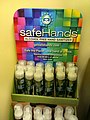
Booze gratis manus sanitizer
Types [edit]
Alcohol-based hand rubs are extensively used in the hospital environment as an alternative to antiseptic soaps. Hand-rubs in the hospital surround have two applications: hygienic hand rubbing and surgical hand disinfection. Alcohol based hand rubs provide a ameliorate pare tolerance as compared to antiseptic soap.[39] Manus rubs also prove to have more effective microbiological properties as compared to antiseptic soaps.
The same ingredients used in over-the-counter hand-rubs are also used in hospital hand-rubs: alcohols such as ethanol and isopropanol, sometimes combined with 4th ammonium cations (quats) such equally benzalkonium chloride. Quats are added at levels up to 200 parts per million to increase antimicrobial effectiveness. Although allergy to alcohol-only rubs is rare, fragrances, preservatives and quats can crusade contact allergies.[78] These other ingredients exercise not evaporate like booze and accumulate leaving a "sticky" residuum until they are removed with lather and water.
The nearly common brands of alcohol mitt rubs include Aniosgel, Avant, Sterillium, Desderman and Allsept Due south. All hospital hand rubs must conform to certain regulations like EN 12054 for hygienic treatment and surgical disinfection by hand-rubbing. Products with a claim of "99.99% reduction" or four-log reduction are ineffective in hospital environment, since the reduction must exist more than "99.99%".[30]
The hand sanitizer dosing systems for hospitals are designed to deliver a measured corporeality of the product for staff. They are dosing pumps screwed onto a bottle or are specially designed dispensers with refill bottles. Dispensers for surgical hand disinfection are ordinarily equipped with elbow controlled mechanism or infrared sensors to avert any contact with the pump.
Composition [edit]
Consumer alcohol-based hand sanitizers, and health care "hand alcohol" or "booze manus antiseptic agents" exist in liquid, cream, and easy-flowing gel formulations. Products with 60% to 95% alcohol past volume are effective antiseptics. Lower or higher concentrations are less effective; most products comprise betwixt threescore% and 80% booze.[79]
In addition to alcohol (ethanol, isopropanol or n-Propanol), hand sanitizers also contain the post-obit:[79]
- boosted antiseptics such as chlorhexidine and quaternary ammonium derivatives,
- sporicides such equally hydrogen peroxides that eliminate bacterial spores that may be present in ingredients,
- emollients and gelling agents to reduce pare dryness and irritation,
- a small amount of sterile or distilled water,
- sometimes foaming agents, colorants or fragrances.
WHO formulations [edit]
The Earth Health Organization has published the following formulations to guide to the production of large quantities of paw sanitizer from chemicals available in developing countries, where commercial hand sanitizer may non exist available:[2]
Formulation 1 [edit]
| Ingredient | Volume required (10-L prep.) | Agile ingredient % (v/v) |
|---|---|---|
| Ethanol 96% | 8333 mL | 80% |
| Glycerol 98% | 145 mL | one.45% |
| Hydrogen peroxide 3% | 417 mL | 0.125% |
| Distilled water | added to 10000 mL | 18.425% |
Formulation 2 [edit]
| Ingredient | Volume required (10-50 prep.) | Active ingredient % (five/five) |
|---|---|---|
| Isopropyl booze 99.8% | 7515 mL | 75.15% |
| Glycerol | 145 mL | one.45% |
| Hydrogen peroxide 3% | 417 mL | 0.125% |
| Distilled h2o | added to 10000 mL | 23.425% |
Production [edit]
COVID-19 pandemic [edit]

In 2010 the World Health Organization produced a guide for manufacturing hand sanitizer, which received renewed interest in 2020 because of shortages of hand sanitizer in the wake of the COVID-19 pandemic.[2] Dozens of liquor and perfume manufacturers switched their manufacturing facilities from their normal production to paw sanitizer.[80] In order to go along up with the demand, local distilleries started using their alcohol to make hand sanitizer.[81] Distilleries producing hand sanitizer originally existed in a legal grey area in the United states, until the Alcohol and Tobacco Tax and Trade Bureau declared that distilleries could produce their sanitizer without authorization.[82] [83]
In the beginnings of the pandemic, because of manus sanitizer shortages due to panic buying, people resort of using threescore% to 99% concentrations of isopropyl or ethyl alcohol for paw sanitization, typically mixing them with glycerol or soothing moisturizers or liquid comprise aloe vera to annul irritations with options of adding drops of lemon or lime juice or essential oils for scents, and thus making DIY hand sanitizers.[84] [85] However, there are cautions against making them, such as a wrong measurement or ingredient may resulting in an insufficient amount of alcohol to impale the coronavirus, thus rendering the mixture ineffective or even poisonous.[86]
Additionally, some commercial products are unsafe, either due to poor oversight and process control, or fraudulent motive. In June 2020, the FDA issued an advisory against use of hand sanitizer products manufacture past Eskbiochem SA de CV in Mexico due to excessive levels of methanol – up to 81% in 1 product. Methanol can be captivated through the peel, is toxic in modest amounts, and in substantial exposure can issue in "nausea, airsickness, headache, blurred vision, permanent blindness, seizures, coma, permanent harm to the nervous system or expiry".[87] Products suspected of manufacture by Eskbiochem SA with excessive methanol have been reported equally far abroad every bit British Columbia, Canada.[88]
In August 2020, the FDA expanded the listing of dangerous paw sanitizers.[89] [90]
See also [edit]
- Listing of cleaning products
Notes [edit]
- ^ Medical inquiry papers sometimes utilize "n-log" to mean a reduction of north on a (base 10) logarithmic scale graphing the number of bacteria, thus "5-log" means a reduction by a factor of 105, or 99.999%
Sources [edit]
- ^ "Tentative Final Monograph for Wellness-Intendance Antiseptic Drug Products; Proposed Rule" (PDF). United States Federal Food and Drug Assistants. March 2009. pp. 12613–12617. Archived (PDF) from the original on 10 March 2010.
- ^ a b c "Guide to Local Production: WHO-recommended Handrub Formulations" (PDF). WHO. April 2010. Retrieved 27 February 2020.
- ^ "paw sanitizer - definition of hand sanitizer in English language | Oxford Dictionaries". Oxford Dictionaries | English language. Archived from the original on 18 September 2017. Retrieved 12 July 2017.
- ^ a b c d due east f g h i j Boyce JM, Pittet D, Healthcare Infection Control Practices Advisory Committee, HICPAC/SHEA/APIC/IDSA Mitt Hygiene Task Force (October 2002). "Guideline for Hand Hygiene in Health-Care Settings. Recommendations of the Healthcare Infection Control Practices Advisory Committee and the HICPAC/SHEA/APIC/IDSA Hand Hygiene Task Force. Society for Healthcare Epidemiology of America/Clan for Professionals in Infection Command/Infectious Diseases Social club of America" (PDF). MMWR. Recommendations and Reports. 51 (RR-16): 1–45, quiz CE1–4. PMID 12418624.
- ^ a b c d e f "Show Me the Science – When & How to Use Hand Sanitizer in Community Settings | Hand washing | CDC". cdc.gov. 3 March 2020. Retrieved 16 March 2020.
CDC recommends washing hands with soap and h2o whenever possible considering paw washing reduces the amounts of all types of germs and chemicals on hands. Simply if soap and water are not available, using a hand sanitizer with at least 60% alcohol can help... sanitizers do not eliminate all types of germs... Hand sanitizers may not be every bit effective when easily are visibly dingy or greasy... Hand sanitizers might not remove harmful chemicals
- ^ de Witt Huberts, J; Greenland, K; Schmidt, WP; Curtis, V (1 July 2016). "Exploring the potential of antimicrobial hand hygiene products in reducing the infectious brunt in low-income countries: An integrative review". American Journal of Infection Control. 44 (seven): 764–71. doi:10.1016/j.ajic.2016.01.045. PMID 27061254.
- ^ Meadows, E; Le Saux, N (i November 2004). "A systematic review of the effectiveness of antimicrobial rinse-free paw sanitizers for prevention of illness-related absence in elementary schoolhouse children". BMC Public Health. iv: 50. doi:10.1186/1471-2458-4-fifty. PMC534108. PMID 15518593.
- ^ a b "Clean Hands Save Lives!". Centers for Disease Command and Prevention. eleven Dec 2013. Archived from the original on 18 August 2017.
- ^ a b c d Bolon, MK (September 2016). "Manus Hygiene: An Update". Infectious Disease Clinics of N America. 30 (three): 591–607. doi:10.1016/j.idc.2016.04.007. PMID 27515139.
In 2002, the CDC released an updated paw hygiene guideline and, for the first time, endorsed the use of alcohol-based hand rubs for the majority of clinical interactions, provided that hands are not visibly soiled
- ^ Hirose, R; Nakaya, T; Naito, Y; Daidoji, T; Bandou, R; Inoue, G; Dohi, O; Yoshida, N; Konishi, H; Itoh, Y (18 September 2019). "Situations Leading to Reduced Effectiveness of Current Hand Hygiene against Infectious Mucus from Flu Virus-Infected Patients". mSphere. 4 (v). doi:10.1128/mSphere.00474-nineteen. PMC6751490. PMID 31533996.
For many reasons, alcohol paw sanitizers are increasingly beingness used as disinfectants over hand washing with soap and water. Their ease of availability, no demand for h2o or plumbing, and their proven effectiveness in reducing microbial load are just a few.
- ^ a b World Health Organization (2015). The selection and use of essential medicines. Twentieth report of the WHO Practiced Commission 2015 (including 19th WHO Model List of Essential Medicines and 5th WHO Model List of Essential Medicines for Children). Geneva: Globe Health Organization. hdl:10665/189763. ISBN9789240694941. ISSN 0512-3054. WHO technical written report series; no. 994.
- ^ "Guide to Local Production: WHO-recommended Handrub Formulations" (PDF) . Retrieved xi April 2020.
- ^ Long, Bruce West.; Rollins, Jeannean Hall; Smith, Barbara J. (2015). Merrill's Atlas of Radiographic Positioning and Procedures (13 ed.). Elsevier Health Sciences. p. sixteen. ISBN9780323319652. Archived from the original on eighteen September 2017.
- ^ Baki, Gabriella; Alexander, Kenneth S. (2015). Introduction to Cosmetic Formulation and Engineering. John Wiley & Sons. p. 173. ISBN9781118763780. Archived from the original on 18 September 2017.
- ^ "Alcohol-costless hand sanitizer prices are skyrocketing, but they don't really work to foreclose the coronavirus, Business Insider - Business Insider Singapore". www.businessinsider.sg . Retrieved eleven April 2020.
- ^ Block, Seymour Stanton (2001). Disinfection, Sterilization, and Preservation. Soil Science. Vol. 124. Lippincott Williams & Wilkins. p. 14. Bibcode:1977SoilS.124..378B. doi:10.1097/00010694-197712000-00013. ISBN9780683307405. Archived from the original on 18 September 2017.
- ^ Miller, Chris H.; Palenik, Charles John (2016). Infection Control and Management of Chancy Materials for the Dental Team (5 ed.). Elsevier Health Sciences. p. 269. ISBN9780323476577. Archived from the original on xviii September 2017.
- ^ World Health Organization (2019). World Wellness Organisation model list of essential medicines: 21st listing 2019. Geneva: World Health Arrangement. hdl:10665/325771. WHO/MVP/EMP/IAU/2019.06. License: CC BY-NC-SA three.0 IGO.
- ^ World Health Organization (2021). Earth Health Organization model listing of essential medicines: 22nd list (2021). Geneva: World Wellness Organization. hdl:10665/345533. WHO/MHP/HPS/EML/2021.02.
- ^ a b Reynolds, SA; Levy, F; Walker, ES (March 2006). "Hand sanitizer alert". Emerging Infectious Diseases. 12 (three): 527–9. doi:ten.3201/eid1203.050955. PMC3291447. PMID 16710985.
- ^ Okafor, Winifred (31 March 2020). "COVID-19: Not all hand sanitizers can impale virus — Chemist". InsideMainland.
- ^ "Purcill Hand Sanitizer existence recalled for low booze content". News Source Guyana. 9 April 2020.
- ^ Willmott, M; Nicholson, A; Busse, H; MacArthur, GJ; Brookes, Due south; Campbell, R (January 2016). "Effectiveness of hand hygiene interventions in reducing illness absence among children in educational settings: a systematic review and meta-assay". Archives of Disease in Childhood. 101 (1): 42–l. doi:10.1136/archdischild-2015-308875. PMC4717429. PMID 26471110.
- ^ Munn Z, Tufanaru C, Lockwood C, Stern C, McAneney H, Barker TH (Apr 2020). "Rinse-gratis hand launder for reducing absence among preschool and school children". The Cochrane Database of Systematic Reviews. 2020 (4): CD012566. doi:10.1002/14651858.CD012566.pub2. PMC7141998. PMID 32270476.
- ^ "Origin of ordinary things: Hand sanitizer". The New Times | Rwanda. 17 March 2020. Retrieved 29 March 2020.
- ^ a b CDC – Handwashing: Make clean Hands Save Lives Archived 29 July 2017 at the Wayback Machine
- ^ "Dirty Hands Spread Unsafe Diseases like H1N1 (aka swine flu)". San Jose Mercury News. 25 April 2009.
- ^ Trampuz, Andrej; Widmer, Andreas F (2004). "Hand Hygiene: A Ofttimes Missed Lifesaving Opportunity During Patient Care". Mayo Dispensary Proceedings. 79 (1): 109–16. doi:x.4065/79.i.109. PMC7094481. PMID 14708954.
booze finer kills all coronaviruses. The virucidal activity of booze against enveloped viruses (such as flu virus or human immunodeficiency virus) is skilful, except for rabies virus.
- ^ CDC (11 February 2020). "Coronavirus Disease 2019 (COVID-19)". Centers for Disease Control and Prevention . Retrieved nine March 2020.
- ^ a b c d Rotter, Manfred L. (1999). "Handwashing and hand disinfection". In Mayhall, C. Glen (ed.). Infirmary Epidemiology and Infection Control (2nd ed.). ISBN9780683306088.
- ^ a b Hibbard, John Due south. (May–June 2005). "Analyses Comparing the Antimicrobial Activity and Safety of Electric current Antiseptic Agents". J. Infusion Nursing. 28 (three): 194–207. doi:10.1097/00129804-200505000-00008. PMID 15912075. S2CID 5555893.
- ^ Kramer, Axel; Rudolph, Peter; Kampf, Gonter; Pittet, Didier (27 April 2002). "Express efficacy of alcohol-based manus gels". Lancet. 359 (9316): 1489–1490. doi:x.1016/S0140-6736(02)08426-Ten. PMID 11988252. S2CID 30450670.
- ^ Pietsch, Hanns (2001). "Hand Antiseptics: Rubs Versus Scrubs, Alcoholic Solutions Versus Alcoholic Gels". Periodical of Infirmary Infection. 48 (Supl A): S33–S36. doi:10.1016/S0195-6701(01)90010-6. PMID 11759022.
- ^ Reynolds, Scott A.; Foster Levy; Elaine S. Walker (March 2006). "Paw Sanitizer Alert". Emerging Infectious Diseases. 12 (iii): 527–9. doi:ten.3201/eid1203.050955. PMC3291447. PMID 16710985. Archived from the original on 2 February 2007. Retrieved ii February 2007.
- ^ Girou, Emmanuelle; Sabrina Layou; Patrick Legrand; Francoise Oppein; Christian Brun-Buisson (August 2002). "Efficacy of hand rubbing with alcohol-based solution versus standard handwashing with clarified soap: randomised clinical trial". British Medical Journal. 325 (362): 362. doi:10.1136/bmj.325.7360.362. PMC117885. PMID 12183307. Archived from the original on 27 Nov 2009.
- ^ Pedersen, L.Thou.; E. Held; J.D. Johansen; T. Agner (2005). "Less skin irritation from booze-based disinfectant than from detergent used for hand disinfection". British Journal of Dermatology. 153 (6): 1142–1146. doi:10.1111/j.1365-2133.2005.06875.ten. PMID 16307649. S2CID 46265931. Archived from the original on 25 February 2021.
- ^ Pedersen, Kynemund; Elisabeth Held; Jeanne Duus Johansen; Tove Agner (2005). "Short-term effects of alcohol-based disinfectant and detergent on skin irritation". Contact Dermatitis. 52 (2): 82–vii. doi:10.1111/j.0105-1873.2005.00504.ten. PMID 15725285. S2CID 24691060.
- ^ Boyce, John M. (July 2000). "Using Alcohol for Hand Antisepsis: Dispelling Old Myths". Infection Control and Hospital Epidemiology. 21 (seven): 438–41. doi:x.1086/501784. PMID 10926392.
- ^ a b Boyce, John M.; Kelliher, Susan; Vallande, Nancy (July 2000). "Skin Irritation and Dryness Associated With Two Hand-Hygiene Regimens: Soap-and-Water Paw Washing Versus Hand Antisepsis With an Alcoholic Mitt Gel". Infection Control and Hospital Epidemiology. 21 (vii): 442–8. doi:x.1086/501785. PMID 10926393. S2CID 22772488.
- ^ Larson EL, Cohen B, Baxter KA (Nov 2012). "Assay of booze-based mitt sanitizer delivery systems: efficacy of foam, gel, and wipes against flu A (H1N1) virus on hands". American Journal of Infection Command. 40 (nine): 806–9. doi:10.1016/j.ajic.2011.x.016. PMID 22325728.
- ^ Gilded, Nina A.; Avva, Usha (2018). "Alcohol Sanitizer". StatPearls. PMID 30020626.
- ^ Seal, Kelsey; Cimon, Karen; Argáez, Charlene (ix March 2017). "Summary of Bear witness". PubMed Health.
- ^ "When & How to Wash Your Hands". cdc.gov. 4 October 2018.
- ^ "Alcohol-Based Hand-Rubs and Fire Safety". Centers for Disease Control and Prevention. 15 September 2003. Archived from the original on 3 April 2007. Retrieved 26 April 2007.
- ^ Ohio OAC 1301:7-seven-3405.five
- ^ "Craftex 5 Litre Hand Sanitiser Gel". AES Industrial Supplies Limited . Retrieved 2021-05-25 .
- ^ Aiello, A. E.; Larson, East. L.; Levy, S. B.; et al. (2007). "Consumer antibacterial soaps: effective or simply risky?" (PDF). Clin Infect Dis. 45: S137–47. doi:ten.1086/519255. PMID 17683018.
- ^ Löffler, Harald; Günter Kampf (2008). "Hand disinfection: How irritant are alcohols?". Journal of Hospital Infection. seventy: 44–viii. doi:10.1016/S0195-6701(08)60010-9. PMID 18994681.
- ^ Pedersen, Fifty.M.; E. Held; J.D. Johansen; T. Agner (2005). "Less skin irritation from alcohol-based disinfectant than from detergent used for paw disinfection". British Periodical of Dermatology. 153 (6): 1142–1146. doi:10.1111/j.1365-2133.2005.06875.10. PMID 16307649. S2CID 46265931.
- ^ Menegueti MG, Laus AM, Ciol MA, Auxiliadora-Martins One thousand, Basile-Filho A, Gir E, et al. (2019-06-24). "Glycerol content within the WHO ethanol-based handrub conception: balancing tolerability with antimicrobial efficacy". Antimicrobial Resistance and Infection Control. 8 (1): 109. doi:10.1186/s13756-019-0553-z. PMC6591802. PMID 31285821.
- ^ Wagner, Daniel Southward. (2000). "GENERAL GUIDE TO CHEMICAL CLEANING Production REGULATION" (PDF). International Sanitary Supply Association, Inc. Archived from the original (PDF) on 31 December 2009.
- ^ Judith E. Foulke (May 1994). "Decoding the Cosmetic Label". FDA Consumer Mag.
- ^ "Paging Dr. Gupta, Manus sanitizer risks". CNN. 21 June 2007. Archived from the original on 25 April 2009.
- ^ "Paw Sanitizers Could Be A Dangerous Poison To Unsupervised Children". NBC News Channel. Retrieved fifteen July 2007.
- ^ "International Travel with Infants and Immature Children". Travelers' Wellness – Yellow Book. viii. March 2009.
- ^ Gormley, Nicole J.; Bronstein, Alvin C.; Suffredini, Anthony F. (January 2012). "The Ascent Incidence of Intentional Ingestion of Ethanol-Containing Paw Sanitizers". Critical Intendance Medicine. forty (i): 290–294. doi:10.1097/CCM.0b013e31822f09c0. PMC3408316.
- ^ "Prisoner 'drunk on swine influenza gel'". BBC news online. 24 September 2009.
- ^ Don't Drink the Paw Sanitizer Archived 14 May 2017 at the Wayback Motorcar NY Times Retrieved March 2017
- ^ Karimi, Faith (27 June 2020). "3 people died and 1 is permanently blind after drinking paw sanitizer in New Mexico". CNN . Retrieved 27 June 2020.
- ^ Yip, Luke; Bixler, Danae; Chang, Arthur (xiv August 2020). "Serious Adverse Health Events, Including Death, Associated with Ingesting Alcohol-Based Hand Sanitizers Containing Methanol — Arizona and New Mexico, May–June 2020". Morbidity and Mortality Weekly Report. 69 (32): 1070–1073. doi:10.15585/mmwr.mm6932e1. PMC7440116.
- ^ Pratap, Rishabh Yard.; Guy, Jack (two February 2021). "Indian children hospitalized after ingesting hand sanitizer instead of polio drops". CNN . Retrieved 2 February 2021.
- ^ "FDA issues proposed rule to address data gaps for certain agile ingredients in health intendance antiseptics". U.Due south. Nutrient and Drug Assistants. 30 April 2015. Archived from the original on ii July 2015.
- ^ Kampf G, Ostermeyer C (Apr 2003). "Inter-laboratory reproducibility of the hand disinfection reference procedure of EN 1500". J Hosp Infect. 53 (iv): 304–half dozen. doi:10.1053/jhin.2002.1357. PMID 12660128.
- ^ "Do manus sanitizers really work?". Academy of Toronto News . Retrieved 29 March 2020.
- ^ Akimitsu, N; Hamamoto, H; Inoue, RI; Shoji, M; Akamine, A; Takemori, KI; Hamasaki, N; Sekimizu, 1000 (1999). "Increment in Resistance of Methicillin-Resistant Staphylococcus aureus to β-Lactams Caused by Mutations Conferring Resistance to Benzalkonium Chloride, a Disinfectant Widely Used in Hospitals". Antimicrobial Agents and Chemotherapy. 43 (12): 3042–3043. doi:10.1128/AAC.43.12.3042. PMC89614. PMID 10651623.
- ^ "Antibacterial Household Products: Cause for Concern". Centers for Affliction Control and Prevention. Archived from the original on 16 August 2001. Retrieved 1 June 2001.
- ^ Davis, Nicola (1 August 2018). "Bacteria becoming resistant to hospital disinfectants, warn scientists". The Guardian.
- ^ Pidot, Sacha J.; Gao, Wei; Buultjens, Andrew H. (1 August 2018). "Increasing tolerance of hospital Enterococcus faecium to handwash alcohols". Science Translational Medicine. 10 (452): eaar6115. doi:x.1126/scitranslmed.aar6115. PMID 30068573.
- ^ "Mitt NTP Research Concept: Triclosan" (PDF). National Toxicology Projection. Archived from the original (PDF) on ten May 2009. Retrieved twenty November 2008.
- ^ McMurry LM, Oethinger M, Levy SB (1998). "Triclosan targets lipid synthesis". Nature. 394 (6693): 531–ii. Bibcode:1998Natur.394..531M. doi:x.1038/28970. PMID 9707111. S2CID 4365434.
- ^ "Ecology Emergence of Triclosan" (PDF). Santa Clara Basin Watershed Direction Initiative. Archived (PDF) from the original on iii June 2008. Retrieved 1 January 2006.
- ^ Heidler, Jochen; Halden, Rolf U. (March 2007). "Mass remainder cess of triclosan removal during conventional sewage treatment". Chemosphere. 66 (ii): 362–9. Bibcode:2007Chmsp..66..362H. doi:x.1016/j.chemosphere.2006.04.066. PMID 16766013. Retrieved 25 January 2010.
- ^ European Commission 2000
- ^ Wisk, Joseph D.; Cooper, Keith R. (1990). "Comparison of the toxicity of several polychlorinated dibenzo-p-dioxins and 2,three,vii,eight-tetrachlorodibenzofuran in embryos of the Japanese medaka (Oryzias latipes)". Chemosphere. twenty (3–4): 361–377. Bibcode:1990Chmsp..xx..361W. doi:x.1016/0045-6535(90)90067-4.
- ^ Aranami et al. 2007
- ^ Sanchez-Prado, Lucia; Llompart, Maria; Lores, Marta; García-Jares, Carmen; Bayona, Josep M.; Cela, Rafael (2006). "Monitoring the photochemical degradation of triclosan in wastewater by UV low-cal and sunlight using solid-phase microextraction". Chemosphere. 65 (eight): 1338–47. Bibcode:2006Chmsp..65.1338S. doi:x.1016/j.chemosphere.2006.04.025. PMID 16735047.
- ^ "Consumers Warned Not to Use Clarcon Skin Products". U.S. Food and Drug Assistants. 15 June 2009. Archived from the original on 14 June 2009. Retrieved 15 June 2009.
- ^ de Groot Ac (1987). "Contact allergy to cosmetics: causative ingredients". Contact Dermatitis. 17 (1): 26–34. doi:x.1111/j.1600-0536.1987.tb02640.10. PMID 3652687. S2CID 72677422.
- ^ a b Bonnabry, Pascal; Voss, Andreas (2017). "Manus Hygiene Agents". In Pittet, Didier; Boyce, John K.; Allegranzi, Benedetta (eds.). Hand Hygiene: a Handbook for Medical Professionals. John Wiley & Sons. pp. 51 et seq. ISBN9781118846865.
- ^ "White Firm Works With Distillers to Increase Mitt Sanitizer Product", Forbes, 18 March 2020
- ^ Kaur, Harmeet. "Distilleries are making hand sanitizer with their in-house alcohol and giving it out for free to combat coronavirus". CNN . Retrieved 21 March 2020.
- ^ Levenson, Michael (nineteen March 2020). "Distilleries Race to Brand Mitt Sanitizer Amongst Coronavirus Pandemic". The New York Times . Retrieved 21 March 2020.
- ^ Alcohol and Tobacco Revenue enhancement and Trade Agency. "Production of Mitt Sanitizer by Distilled Spirits Permittees". The TTB Newsletter. US Department of the Treasury. Retrieved 21 March 2020.
- ^ Lindberg, Sara. "How to Make Your Ain Manus Sanitizer". Healthline. Healthline Media. Retrieved 30 June 2020.
- ^ "71° Shop shelves wiped clean? Here's how you can make homemade mitt sanitizer". Fox 6 Now. Trick Television Stations, LLC. 14 March 2020. Retrieved one July 2020.
- ^ Mitroff, Sarah. "No, you shouldn't brand your own hand sanitizer". CNET . Retrieved 25 March 2020.
- ^ "FDA advises consumers non to use paw sanitizer products manufactured past Eskbiochem". fda.gov. Nutrient and Drug Assistants. nineteen June 2020. Retrieved 27 June 2020.
- ^ "British Columbians warned over hand sanitizers containing potentially toxic ingredient". richmond-news.com. Richmond News. 27 June 2020. Retrieved 27 June 2020.
- ^ "FDA updates on hand sanitizers consumers should non use". U.S. Food and Drug Assistants (FDA). 10 August 2020. Retrieved x August 2020.
- ^ "COVID-19". U.Due south. Nutrient and Drug Administration (FDA). 5 August 2020. Retrieved 10 Baronial 2020.
External links [edit]
- "Executive Summary: National Stakeholders Meeting on Alcohol-Based Hand-Rubs and Burn Safety in Health Care Facilities". American Hospital Clan, Co-Hosted by the U.S. Centers for Affliction Control & Prevention (CDC) and AHA. 22 July 2003. Archived from the original on eight March 2008.

Source: https://en.wikipedia.org/wiki/Hand_sanitizer
Posted by: mcmichaelthingaing.blogspot.com
0 Response to "What Are The Instructions For A So Clean Automated Sanitizer"
Post a Comment