

What Processes Can I End In Task Manager Windows 7
Have y'all e'er browsed the Windows Task Manager and wondered what some of the entries were for? The Windows organization process section, which is at the bottom of the list in the Windows 10 Task Manager, holds some processes that are critical to your computer running properly.
What practice these processes do, and what would happen if you ended them? Let's expect at some of the well-nigh important entries in the Windows Task Managing director.
Note: The newer Task Manager in Windows 8.1 and later refers to most system entries with friendly names, like Windows Logon Application instead of winlogon.exe. If you lot're using Windows 7, yous'll see the executable file names. In later versions of Windows, right-click ane and choose Properties to see its executable proper noun.
one. Arrangement (ntoskrnl.exe)
Windows won't allow you kill the confusingly named Organisation entry through the Task Manager. That's because it'due south vitally important to the internals of your device. System handles tasks at the kernel level, such as hosting drivers to make sure that software tin communicate with hardware.
You can imagine the consequences if you were to terminate this. Since vital drivers similar accessing your disks and USB devices rely on System doing its job, closing it will lock up your system and require a hard reboot. If you lot demand to restart System (perchance when troubleshooting high CPU usage), y'all should reboot your computer normally. Regular problems with this entry could indicate a hardware trouble.
2. Windows Logon Application (winlogon.exe)
You might assume that this procedure isn't likewise important once you're logged into Windows, merely information technology's quite the opposite. Its showtime function is loading your user profile when you log in. Any Registry changes that you've made to only your account take effect when y'all log in, thanks to this process.
Winlogon is also extremely important for security because it's hard-wired to listen for the Ctrl + Alt + Del shortcut. When you're logged in, this key combination brings upwardly the Windows Security Screen, which contains a few quick links for yous to change your password, sign out, and similar.
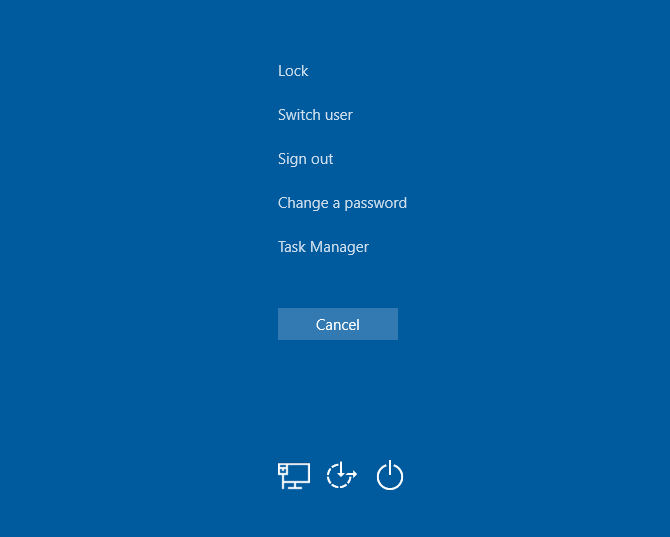
But you can also enable an pick called Secure sign-in that requires you to printing Ctrl + Alt + Del when logging into Windows. Because the "iii-finger salute" is ever caught past winlogon, pressing it ensures that you lot see the actual Windows logon screen and not a fake designed to steal your countersign.
To complete its duties, winlogon also displays the screen saver and/or locks your PC subsequently you've been away for some time. If you try to use the End Procedure command on the Task Manager, Windows will warn you that this is a bad idea.
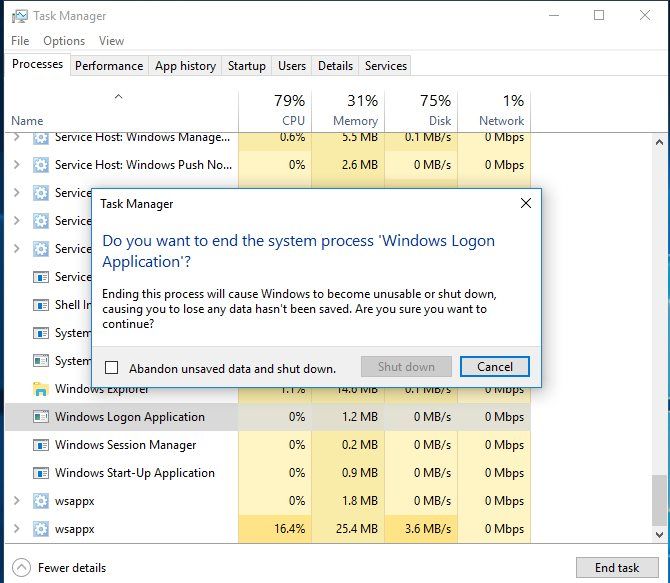
Do it anyway, and your PC will get completely black with no hope for recovery. Y'all'd accept to reboot to get it running again at that point.
3. Windows Start-Up Awarding (wininit.exe)
Wininit is a process that helps Windows get situated when you starting time log in, and needs to stay running for the entire duration of your use. Its virtually of import function is acting as a springboard for most background apps and processes that run when you outset Windows. This includes starting other critical processes similar lsass.exe and lsm.exe.
It runs until yous close your figurer down. Trying to cease it prematurely will event in a Windows prompt warning you lot not to exercise this. And like Winlogon, doing so anyhow crashes the organisation to the point of needing a reboot.
Another sibling in the essential Windows process family, csrss's role has changed throughout Windows' development. In the really sometime days, this process handled all the graphical elements of Windows. But now, it handles a few background functions instead.
Its two most disquisitional roles are shutting downwards Windows and launching the conhost.exe process, which launches the Control Prompt. This might not sound like much, just it's a vital process. If something gets screwed up and this process doesn't run at boot, y'all'll get a blue screen.
As you might accept guessed, ignoring Windows' advice about catastrophe this procedure will consequence in a frozen system.
5. Windows Session Manager (smss.exe)
Another critical part of the Windows boot process (encounter a theme here?), the Windows Session Managing director process has been around since Windows three.i.
Whenever Windows loads up, smss makes a few preparations beginning. It maps your drives and creates virtual retentivity paging, to proper name a few. Once it'southward finished, it calls winlogon and you see the login screen.
Obviously, the Session Manager stays alive afterward you lot've logged in. It watches both winlogon and csrss to look for either one of them to finish. If this occurs equally part of a standard routine, Windows will shut downwards every bit normal. But if either process ends unexpectedly, smss will freeze upward your reckoner.
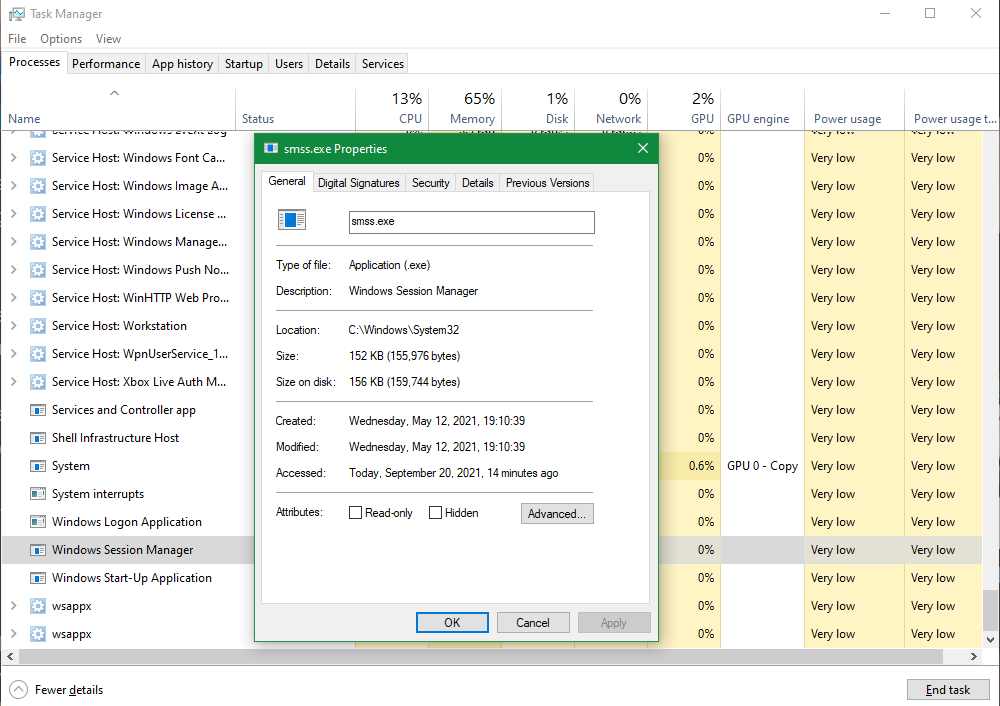
Similar the higher up processes, trying to terminate this one through the Job Manager results in a warning and then a locked-up system.
6. Windows Shell Experience Host
Here'due south a newer process that works almost exclusively with elements new to Windows 10. If y'all've used a previous version of Windows, you likely noticed the fresh coat of paint that Windows 10 applied to staples like the clock and agenda. The Shell Feel Host process handles these elements, along with the color and transparency furnishings of the Kickoff menu and Taskbar.
In improver to the updated look, this process also works to display Store apps in a window. If you employ a slideshow as your wallpaper, yous tin can give thanks Shell Experience Host for making it happen. Dissimilar many other processes on this list, closing it won't crash your system. Instead, Windows will but restart it after a few seconds. But there's no reason to close it—doing so won't change the expect of Windows.
7. Windows Explorer (explorer.exe)
This entry doesn't hold Windows together, but it does handle much of the graphical interface you use every 24-hour interval. Only what happens if yous end Windows Explorer in the Task Manager?
As it turns out, terminating Windows Explorer volition not merely close any open File Explorer windows, but information technology will also render the Commencement menu, Taskbar, and Organization Tray unusable.
Still, restarting Explorer can really bear witness to exist helpful. If your Start Carte or Taskbar starts acting upward, a quick restart of this process can clear up issues. It's much faster than restarting your PC for a small event limited to Windows Explorer.
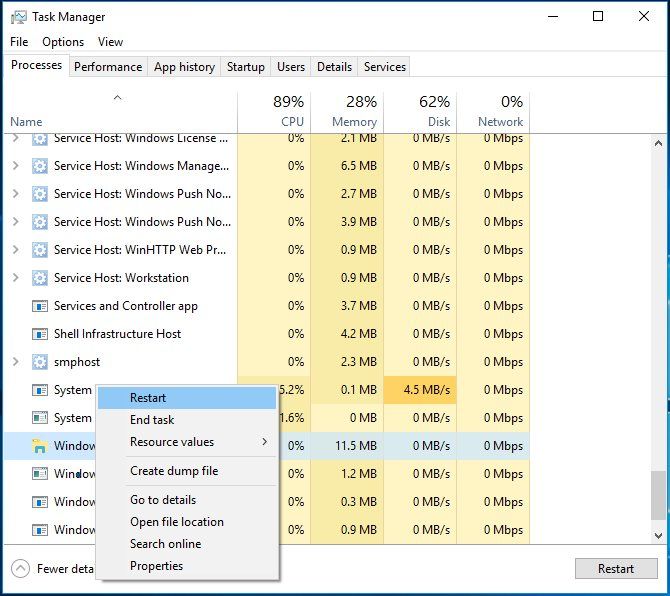
In Windows 8.ane and later, you can correct-click on Windows Explorer and cull Restart to instantly impale and re-run it. On Windows 7, you'll have to right-click it and cull Finish Process, then go to File > Run new job and enter explorer.exe to get information technology going again.
There are other ways to restart File Explorer if needed, and then be aware of them for the next time you accidentally terminate Windows Explorer's task.
Be Enlightened of Disquisitional Windows Processes
The processes nosotros've looked at certainly aren't the simply mission-critical ones running in your Chore Manager. Just they're all vital to your Windows experience in some way, and now yous know what they do.
Thankfully, in most cases, Windows protects you from doing something stupid and shutting these downwardly, so you lot don't have much to worry about.
Meanwhile, the Task Manager is useful for a lot more yous might retrieve. It'due south hiding handy tools beyond letting you view system processes.
About The Author


What Processes Can I End In Task Manager Windows 7,
Source: https://www.makeuseof.com/tag/vital-windows-task-manager-processes/
Posted by: mcmichaelthingaing.blogspot.com
0 Response to "What Processes Can I End In Task Manager Windows 7"
Post a Comment